Which Cat Litter Should You Choose for a Clean Home?
A clean litter box can make all the difference in a cat's life and in the comfort of your home. The right cat litter limits odors, simplifies cleaning, and gives your companion a place where they feel safe. Yet between clumping, plant-based, mineral, or crystal litters, the choice can quickly become less simple than it seems.
The best product isn't necessarily the same for every household. It depends on your cat's age, sensitivity, the number of animals at home, your space, and the time you can devote to upkeep. Here's how to choose with confidence, without sacrificing cleanliness or your best friend's well-being.
Which Cat Litter Suits Your Companion?
Cats have very specific preferences. Some like a fine texture reminiscent of sand, while others tolerate pellets or crystals better. A sudden change can unsettle them, even if the new litter performs better on paper. If your cat avoids the box, scratches around it at length, or eliminates elsewhere, texture, scent, or cleanliness may be the cause.
For a healthy adult cat, an unscented clumping litter is often an excellent starting point. It forms clumps that are easy to remove after urination, keeping the rest of the box clean longer. It's especially practical for busy households wanting quick daily maintenance.
Kittens, senior cats, and cats with sensitive paws generally prefer a soft, low-dust litter. A texture that's too coarse can be uncomfortable, especially with arthritis, fragile claws, or after veterinary surgery. In these cases, prioritize comfort over the product's advertised lifespan.
If your cat suffers from urinary issues, recurring diarrhea, or shows a sudden change in litter box habits, consult your veterinarian. Litter doesn't replace health monitoring, but it can help you quickly spot unusual signs, such as increased urination frequency or abnormal stools.
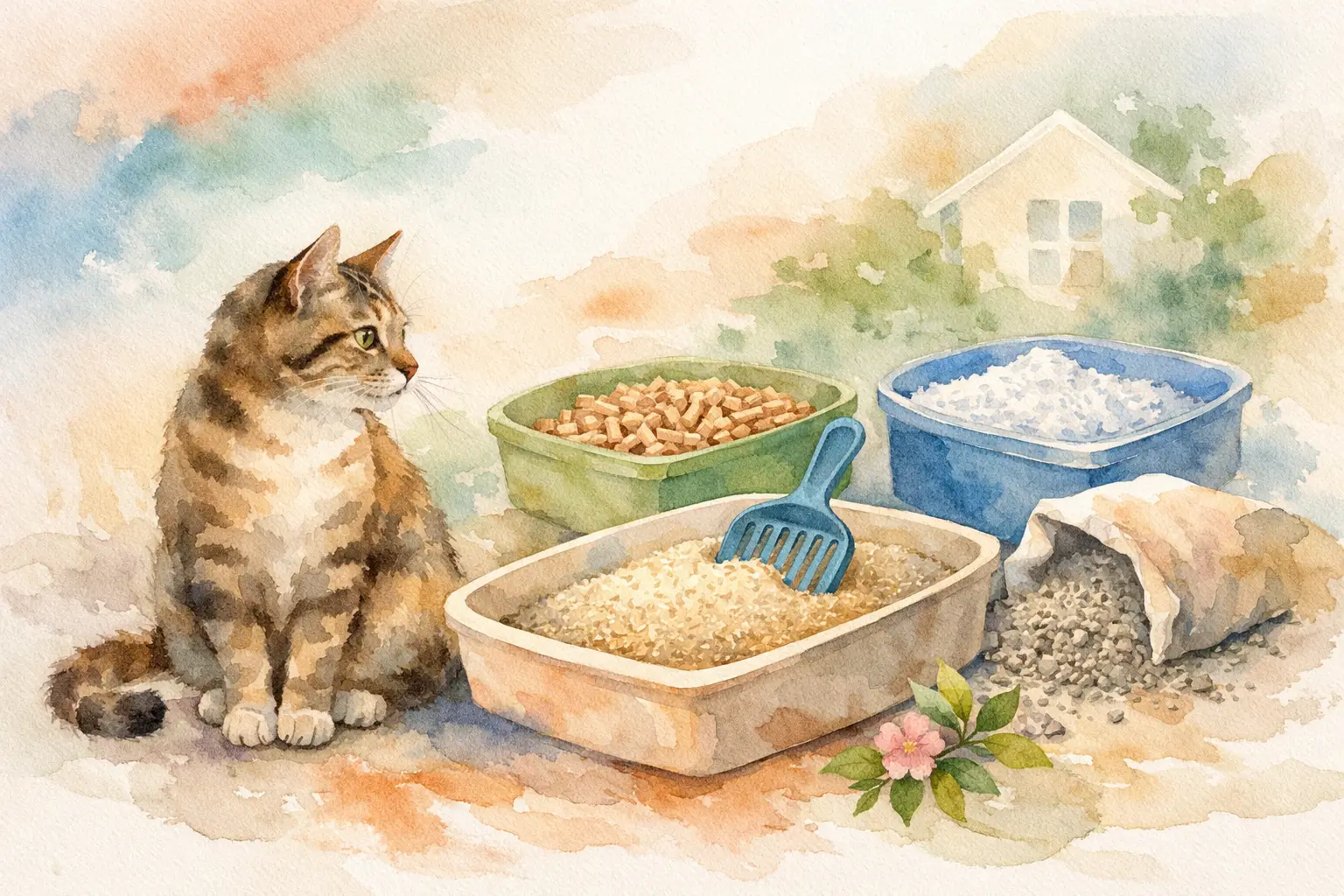
The Main Types of Litter
Clumping Mineral Litter
Most often made from clay, it remains very popular for its absorbency and ease of use. Clumps can be scooped out, reducing waste and helping control odors between full cleanings.
Its main trade-off is weight. Bags can be heavy to carry, and some products generate dust. For sensitive cats or people with allergies, look for a low-dust, unscented formula. Home delivery also avoids having to regularly lift these bulky bags.
Plant-Based Litter
Plant-based litters can be made from wood, corn, recycled paper, plant fibers, or nut shells. They appeal to owners looking for a lighter option, often compostable depending on local and manufacturer guidelines.
They vary widely in clumping ability and odor control. Wood pellets, for example, are generally low-dust and absorbent, but their texture doesn't appeal to every cat. A fine, clumping plant-based litter may suit cats accustomed to sand better, but its cost per bag can be higher.
Silica Crystal Litter
Crystals absorb moisture and can offer good odor control. They often require fewer full replacements than traditional litter, provided the box is stirred regularly to distribute moisture.
However, some cats dislike the sensation of crystals under their paws. The noise they make when scratching can also startle a timid animal. This option is worth introducing gradually, especially if your cat is particular about their box.
Paper or Soft Pellet Litter
Highly absorbent and generally low-dust, paper litter is a good solution after surgery, for a recovering cat, or for animals with sensitive airways. It doesn't always clump as well as clay, which may require more frequent changes.
Its advantage is clear: it's soft, lightweight, and easy to handle. In a multi-cat household, however, odors need closer monitoring, and soiled areas should be removed promptly.
Odors: What Actually Works
A strong scent doesn't guarantee a cleaner box. It can even bother a cat, whose sense of smell is far more sensitive than ours. An unscented, absorbent litter that's cleaned regularly is often more effective than a heavily scented product that only temporarily masks odors.
Remove stools and urine clumps at least once a day. In a household with two or more cats, cleaning twice a day makes a real difference. Then add a small amount of fresh litter to maintain a comfortable depth, ideally around 5 to 7 cm depending on the texture chosen.
The box should be thoroughly cleaned regularly with warm water and mild soap, then dried completely before refilling. Avoid strongly scented products or those containing ammonia: they can leave an unpleasant smell for your cat and encourage them to seek another spot.
The Box Matters as Much as the Litter
Even the best cat litter won't make up for a box that's too small, poorly placed, or not cleaned enough. Your cat needs to be able to enter, turn around, and scratch without bumping into the walls. Larger cats need a generously sized box, while kittens and senior animals sometimes benefit from a lower entry point.
Covered boxes can keep odors contained within the room, but they also concentrate those odors inside for the cat. Some cats love them for the privacy, others refuse them. An open box is often the simplest choice for monitoring cleanliness and observing your pet's habits.
As for the number of boxes, the rule of thumb is simple: one box per cat, plus one. Two cats should ideally have access to three boxes, placed in calm, separate spots. Don't place litter near food and water bowls, or next to a noisy appliance like a washer or furnace.
Successfully Switching Litter
Abruptly switching products is one of the most common causes of box rejection. Even a high-quality litter can be rejected if introduced without a transition. Gradually mix the new litter with the old one over 7 to 10 days, increasing the proportion of the new product each day.
Watch your cat during this period. If they enter the box willingly, scratch normally, and maintain their habits, you can continue. If they hesitate, vocalize, or eliminate elsewhere, temporarily go back to a higher proportion of the old litter. Patience costs less than an established cleanliness problem.
Thinking About Routine and Budget
The price on a bag doesn't tell the whole story. A pricier but highly absorbent, clumping litter may last longer and reduce the amount discarded. Conversely, a budget option may require more frequent replacement. Compare cost per use, odor control, and maintenance time, not just the price at checkout.
For Canadian households that regularly order food, treats, and hygiene products, bundling recurring purchases can also lighten the load. PetMobile offers cat essentials delivered right to your door, a welcome solution when litter bags get added to large food orders.
Your cat won't ask you for a specific brand, but they'll quickly show you what works for them. A calm box, a texture they accept, and a reliable cleaning routine are the best guides to keeping your home fresh and your companion at ease.